


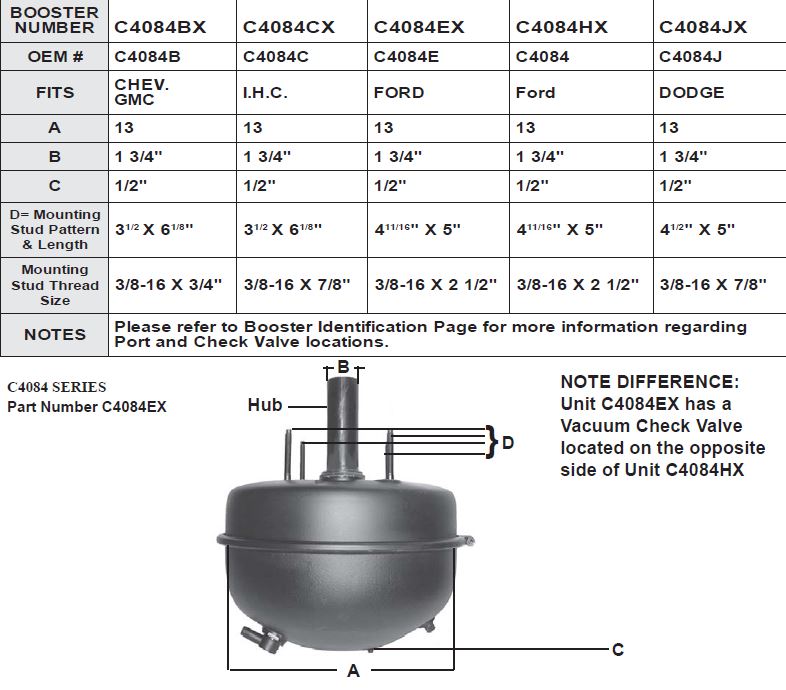
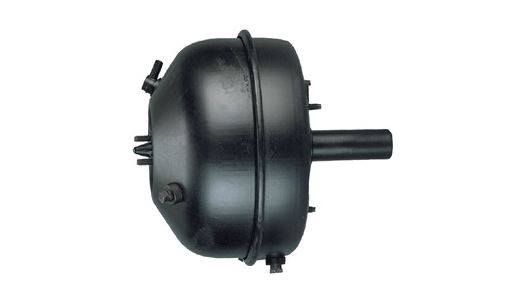
C4084H Booster Ford B500-700
⚠ Prop 65 Warning — Click To View Details

Couldn't load pickup availability
- Description
- Reviews
The Midland C4084E vacuum brake booster is a heavy-duty braking component originally used on select Ford medium-duty trucks and buses from 1968 through 1977. Designed for firewall-mounted applications, this booster uses engine vacuum to reduce the amount of pedal effort required to apply the brakes, helping provide smoother, more controlled braking in larger commercial vehicles.
Because the C4084E was engineered for older Ford truck platforms, maintaining the correct booster configuration is especially important during a restoration or brake system repair. Mounting dimensions, pushrod position, pedal linkage, master cylinder compatibility, and vacuum connections can vary between similar-looking units. Rebuilding the original booster is often the best way to preserve proper fitment and retain the vehicle’s original brake system design.
Vehicle Applications
The Midland C4084E brake booster was used on the following firewall-mounted Ford applications:
- 1968–1977 Ford F500, F600, F700 and F750 with firewall-mounted brake booster
- 1968–1977 Ford B500, B600 and B700 with firewall-mounted brake booster
- 1968–1977 Ford N500, N600, N700 and N750 with firewall-mounted brake booster
These applications may include medium-duty trucks, commercial chassis, school buses, service vehicles, utility trucks, delivery trucks and other specialty vehicles built on Ford F-Series, B-Series and N-Series platforms.
Master Cylinder Compatibility
The C4084E booster is commonly used with the following Midland master cylinder part numbers:
- C3507SB – Single-system master cylinder
- C3507SF – Split-system master cylinder
Master cylinder rebuilding is also available. Rebuilding the booster and master cylinder together can be beneficial when restoring an older braking system, particularly when both components have been in service for many years or have experienced internal corrosion, fluid leakage or long-term storage.
Common Signs of a Failing Vacuum Booster
- A brake pedal that feels unusually hard
- Increased pedal effort when stopping
- A hissing sound near the booster or brake pedal
- Slow pedal return or inconsistent pedal feel
- Vacuum leakage affecting engine idle
- Reduced power-assist performance
Brake performance can also be affected by the master cylinder, vacuum supply, check valve, hoses, wheel cylinders, hydraulic lines and brake adjustment. The complete brake system should be inspected whenever booster problems are suspected.
Important Fitment Information
Please verify the part number on your original booster before ordering. Ford used several brake booster and master cylinder combinations during these model years, and application listings alone may not identify every possible variation.
For the most accurate identification, compare the following details:
- Original Midland part number
- Mounting bolt pattern
- Firewall mounting configuration
- Pushrod length and pedal connection
- Master cylinder mounting pattern
- Single-system or split-system brake configuration
If the identification tag is missing or difficult to read, photographs of the booster, mounting flange, pushrod, master cylinder mounting surface and overall unit can help confirm the correct application.
- The Midland C4084E is an important part of the original braking system used on many classic Ford medium-duty vehicles. Whether you are restoring a vintage work truck, repairing a commercial chassis or keeping an older fleet vehicle in service, rebuilding the correct original booster can help preserve proper fitment and dependable power-assisted braking.

Note: Professional installation is recommended. Always inspect and test the complete braking system before returning the vehicle to service.